
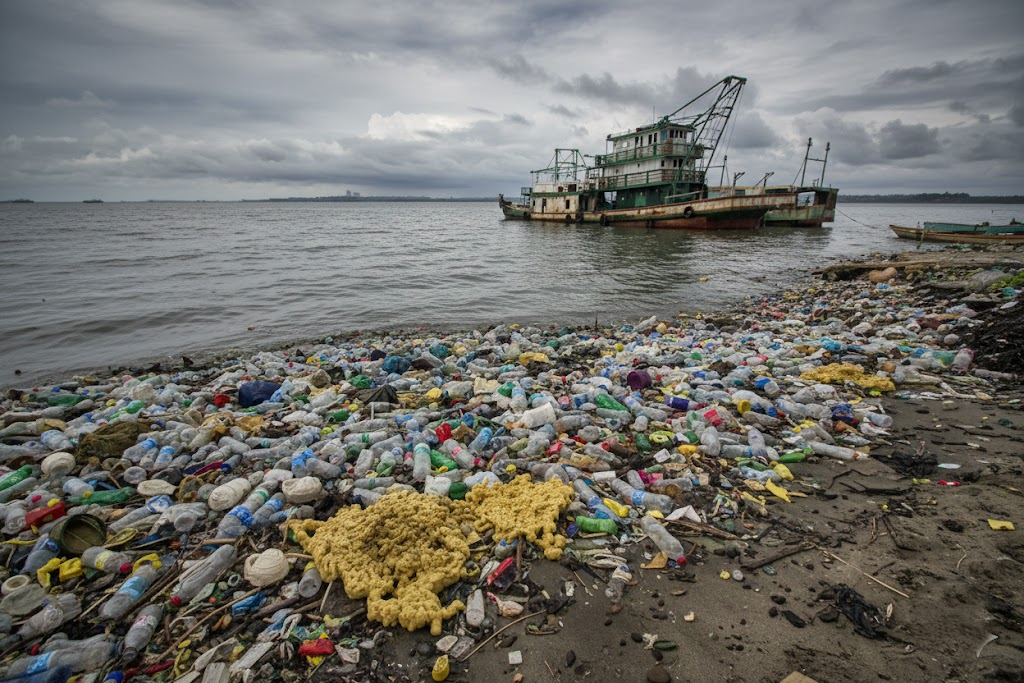
Plastic and polyurethane (PU) pollution in Palampur, Himachal Pradesh, poses severe ecological threats, including toxic contamination of the Neugal river and soil from mismanaged landfill waste. Key impacts include respiratory illnesses from burning,, microplastic accumulation in agricultural soil, and threats to livestock. Future initiatives focus on improved waste segregation, plastic-based road construction, and strict, high-penalty bans on single-use items.
ey Highlights & Impact
- Pollution Sources: In Palampur, burning polythene at dumping sites causes toxic air pollution, resulting in respiratory issues for residents.
- Environmental Degradation: Rainwater carries toxins from landfills into local rivers like the Neugal.
- Agricultural Impact: Microplastics have been identified in the agricultural soils of the Kangra district (including Palampur), with 68% being fibrous in shape.
- Animal Health: Increased plastic pollution has worsened conditions for livestock and increased the stray dog population.
Future Scope & Solutions
- Improved Management: Upgrading waste management facilities with larger plastic shredders, and separate collections for liquid and solid waste.
- Infrastructure & Innovation: Utilizing plastic waste for constructing more durable roads (30% more durable than conventional roads).
- Policy Implementation: Implementing the “Buy-Back Policy” to purchase non-recyclable plastic from households and rag pickers at ₹75 per kg.
- Alternative Waste Treatment: Utilizing cement kilns for the sustainable disposal of non-recyclable plastic waste.