
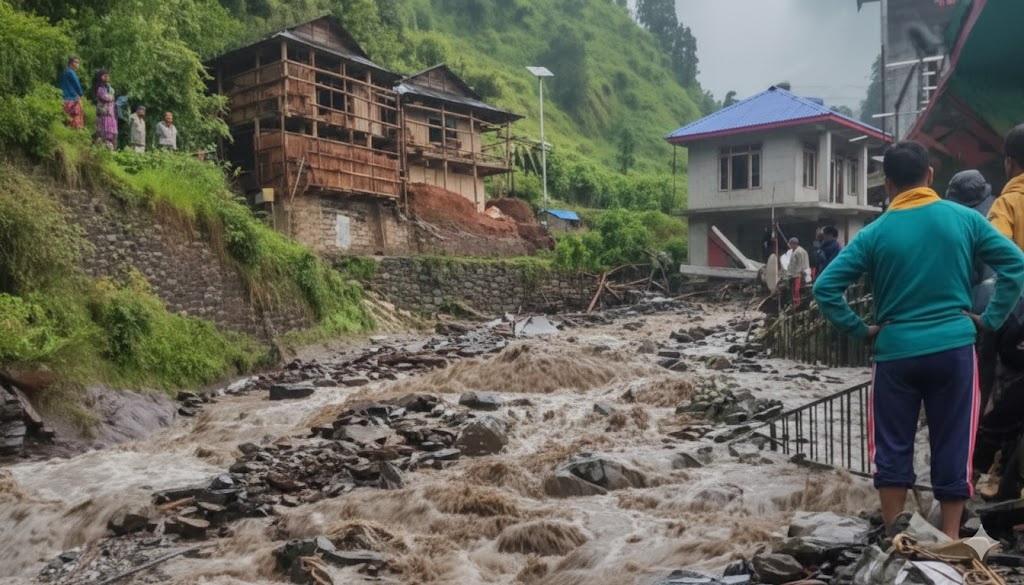
Palampur, located in Himachal Pradesh’s fragile Himalayan region, faces severe landslide vulnerability, especially during monsoons, due to steep slopes, heavy rainfall, and, in many cases, unplanned infrastructure development. Key impacts include destruction of roads, residential damage, and loss of life. Future initiatives focus on integrating community-based disaster management, early warning systems, and improved, sustainable land-use planning to mitigate risks.
Key Highlights of Vulnerability
- Geological & Climatic Factors: Palampur’s position in the Himalayas means it has weak, unstable soil, steep slopes, and high seismic activity.
- Trigger Events: Intense, prolonged monsoon rainfall is the primary driver of landslide events in the region.
Impact on Region
- Infrastructure Destruction: Landslides frequently cause major damage to critical infrastructure, including highways and residential buildings.
- Economic Disruption: Road blockages isolate villages, disrupt transportation, and hinder economic activities.
- Environmental Degradation: Slope instability results in severe erosion and ecological damage.
Future Scope and Mitigation
- Technology & Monitoring: Implementation of early warning systems to detect, map, and predict landslide susceptibility.
- Sustainable Development: Enforcing strict construction regulations and proper land-use planning to avoid risky areas.
- Community Engagement: Strengthening local capacity through disaster management training and fostering awareness